
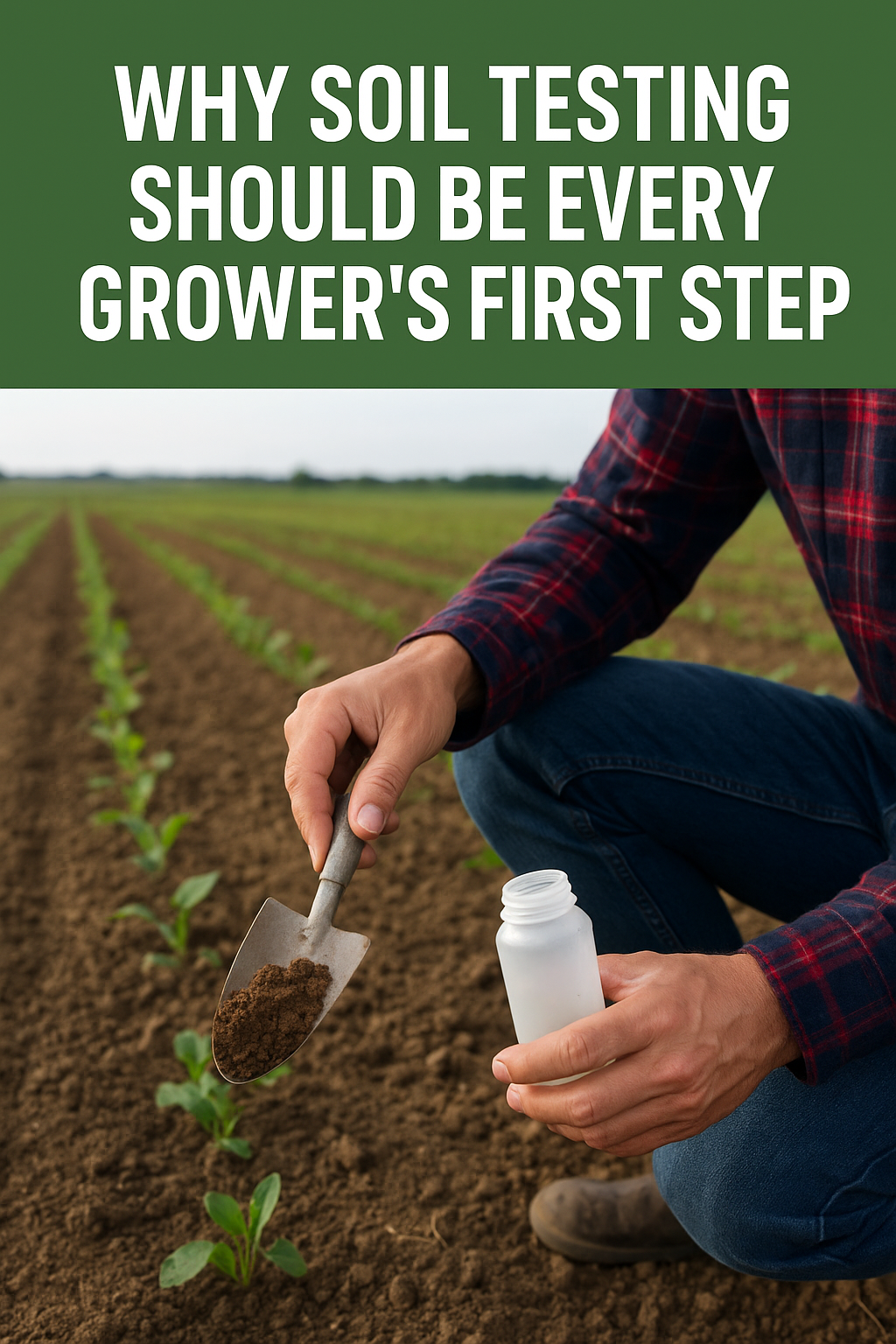
Successful growing starts long before seeds go into the ground — it begins with fully understanding the soil beneath your feet. Soil testing is one of the most valuable yet often overlooked steps in modern farming. Whether you’re a commercial farmer, greenhouse grower, market gardener, or home hobbyist, soil testing provides essential insights that help you make smarter decisions, reduce waste, and maximize crop performance.
This is why soil testing should always be the first step for every grower.
🌱 1. Soil Testing Reveals What Your Plants Really Need
Every crop requires specific nutrients to grow well, and these nutrients come from the soil. However, soil nutrient levels naturally vary from farm to farm and even from one plot to another.
A soil test identifies:
- Nitrogen, phosphorus, and potassium levels
- Secondary and micronutrients
- Soil pH
- Organic matter content
- Salinity and electrical conductivity
- Potential toxicities or excess nutrients
Instead of guessing, you get a clear picture of what is missing and what is already abundant. This prevents over-fertilizing, under-fertilizing, and nutrient imbalance — all of which can reduce growth and yield.
🌾 2. Save Money by Reducing Unnecessary Fertilizer Use
Many growers apply fertiliser simply because “it’s what they’ve always done.” But without a soil test, it’s easy to waste money on nutrients the soil doesn’t need.
Soil testing helps you:
- Target exactly which nutrients to apply
- Use precise amounts for maximum efficiency
- Avoid excessive application that leads to runoff and loss
- Improve your return on investment
It’s a simple step that leads to smarter, more cost-efficient growing.
🌿 3. Optimise Crop Yields and Health
Healthy soil = healthy plants.
When nutrient levels and pH are balanced, crops become stronger, more resistant to stress, and better at absorbing water and nutrients. Soil testing helps create slot gacor the perfect conditions for plants to reach their full potential.
The result?
- Higher yield
- Better-quality produce
- Improved root development
- Greater consistency across the growing area
Even small adjustments can make a big difference.
🌍 4. Build Long-Term Soil Health
Soil is a living system that needs ongoing care. Regular soil testing helps growers track how their soil changes over time, allowing for early intervention before problems become serious.
Long-term benefits include:
- Preventing nutrient depletion
- Avoiding harmful nutrient buildup
- Maintaining stable pH levels
- Improving soil structure and organic matter levels
Growers who monitor their soil annually have healthier, more resilient crops year after year.
🔍 5. Early Detection of Hidden Problems
Some soil issues don’t show visible symptoms until it’s too late. Soil testing helps detect hidden risks such as:
- High salinity
- Compaction-related nutrient lock-up
- pH drift
- Deficiency in essential trace minerals
- Toxic buildup from repeated fertiliser use
Catch these issues early, and you protect your crops — and your profits.
🌟 Conclusion: A Small Step With Big Results
Soil testing is not complicated or expensive. Yet it is one of the most powerful tools available to growers. By starting with a soil test, you take control of your growing environment and ensure every action — fertilizing, watering, planting — is based on real, accurate data.
Grow smarter. Grow stronger. Grow with confidence.
Soil testing should always be the first step.

Leave a Reply